
Preparing Your Skin for Seasonal Changes: An Ayurvedic Approach
RT
Preparing Your Skin for Seasonal Changes: An Ayurvedic Approach
As the seasons change, so does the world around us — and our skin feels every shift. Cooler, drier air can leave skin tight and flaky; summer heat can bring oiliness and irritation. Learning to adapt your routine as the seasons turn is one of the simplest ways to keep your skin healthy and glowing all year long.
Ayurveda, the ancient Indian system of medicine, offers a beautiful framework for this. Rather than fighting these changes, it teaches us to move with them — aligning our skincare, diet, and daily rituals with nature's rhythms so our skin stays balanced from the inside out.

The Ayurvedic Perspective on Skin
Ayurveda categorizes skin types according to the three doshas: Vata, Pitta, and Kapha. Each dosha has unique characteristics and responds differently to seasonal changes. For instance, Vata skin tends to be dry and may require extra moisture during the colder months, while Pitta skin, which is more prone to inflammation, needs cooling in the summer.
Understanding your skin's dosha can help you tailor your routine to address its specific needs. This personalized approach not only improves your skin's appearance but also enhances its overall health.
Identifying Your Skin Type
Ayurveda describes three doshas — Vata, Pitta, and Kapha — and each shows up in the skin differently. Most of us are a blend, but one tends to lead. Knowing yours is the key to adapting with the seasons:
Vata: Dry, thin, and delicate. Prone to tightness, flakiness, and fine lines, especially in cold, windy weather.
Pitta: Sensitive and warm. Prone to redness, inflammation, and breakouts, especially in heat.
Kapha: Oily, thick, and smooth. Prone to congestion, enlarged pores, and dullness, especially in damp weather.
Fall and winter are governed by Vata — cold, dry, and light — which means every skin type is pulled toward dryness this time of year. Here's how to care for each as the temperature drops.
Caring for Each Skin Type in Fall and Winter
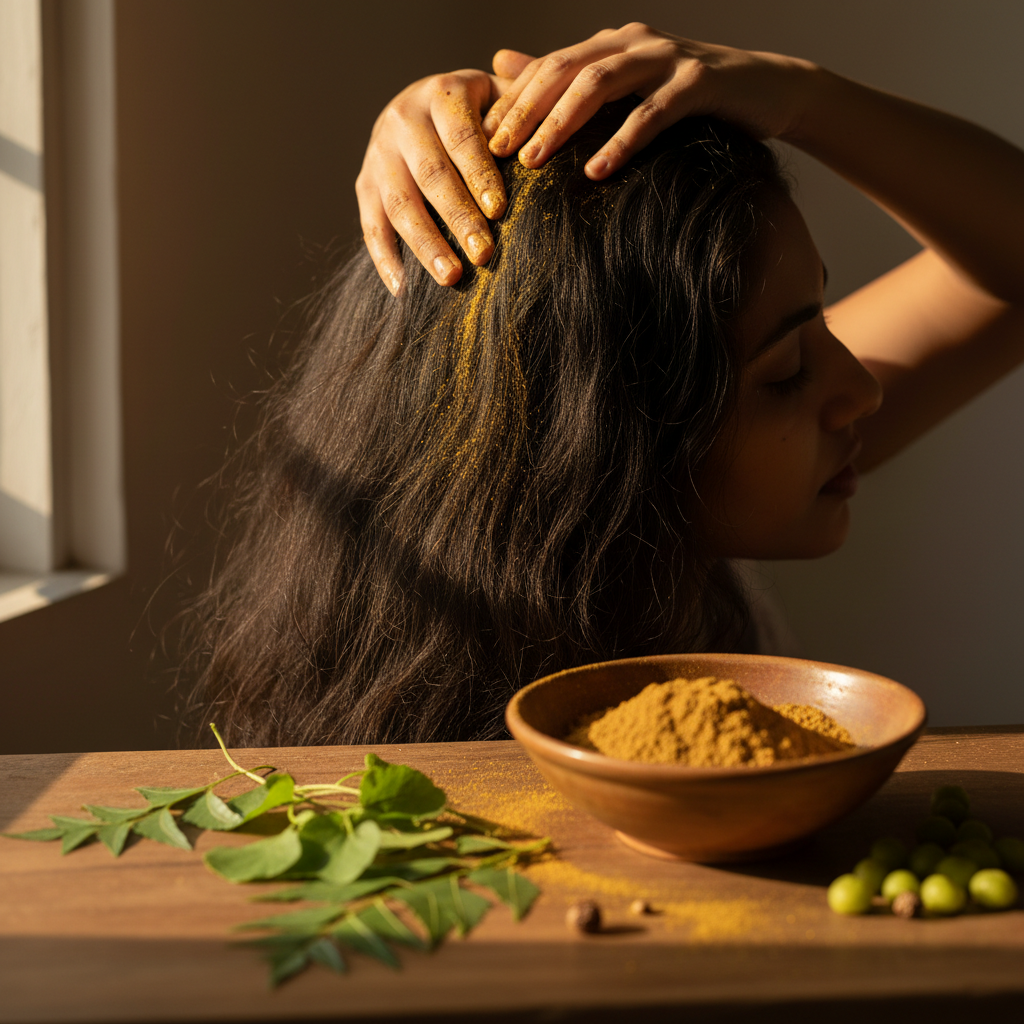
Vata skin. This is when Vata skin needs the most support, because the season amplifies its natural dryness. The cool, windy air depletes moisture quickly, so lean into intense hydration: rich, nourishing oils like almond or sesame, creamy moisturizing masks, and a gentle cream cleanser. Skip harsh exfoliants and hot water, which strip the skin further. A warm facial oil massage before bed works wonders.
Pitta skin. The cooler weather is a welcome relief for Pitta's heat, so redness and breakouts often calm down now. The challenge shifts to dryness — the dry air can still leave Pitta skin dehydrated, sensitive, or flaky at the edges. Keep soothing botanicals like aloe and rose water in rotation, but add a nourishing (not heavy) moisturizer to lock in hydration, and avoid very hot showers, which can reawaken inflammation.
Kapha skin. Kapha's naturally oily, thick skin tolerates the cold better than most and holds moisture well. The risk in fall and winter is sluggishness — cold, damp conditions can lead to congestion, puffiness, and dullness. Favor lighter, non-greasy moisturizers rather than heavy oils, exfoliate gently and regularly to keep pores clear, and use dry brushing and facial massage to boost circulation and bring back your glow.
Seasonal Diet and Lifestyle Tips
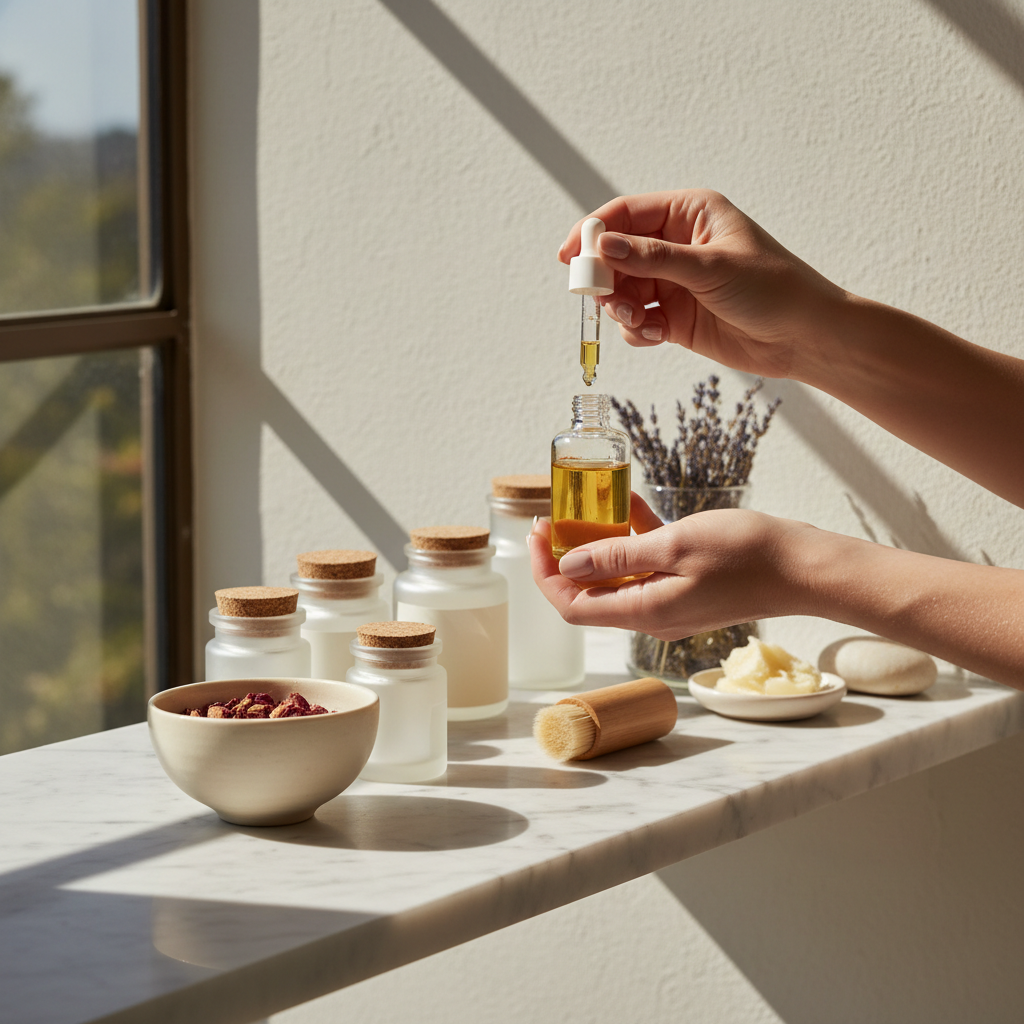
In Ayurveda, skincare doesn't stop at what you put on your face — what you eat matters just as much. Try to eat with the season and in a way that balances your dosha:
For dry Vata skin in fall and winter, favor warm, nourishing foods and healthy fats — cooked vegetables, soups and stews, ghee, nuts, and seeds.
For reactive Pitta skin in summer, lean on cooling foods like cucumber, melon, leafy greens, and plenty of water.
For congestion-prone Kapha skin in spring, choose lighter, warming meals with plenty of greens and spices, and go easy on heavy, oily, or overly sweet foods.
Hydration helps every skin type — warm water and herbal teas are especially supportive as the weather cools.
Small Rituals, Big Difference
Stress is one of the most common triggers for skin flare-ups, so daily practices that calm the nervous system show up directly in your complexion. A few minutes of yoga, breathwork, or meditation can do as much for your skin as any serum. Abhyanga — a daily self-massage with warm oil — is a cherished Ayurvedic ritual that nourishes the skin, seals in moisture, and soothes the mind all at once.
When you align your routine, your plate, and your rituals with the season, caring for your skin stops feeling like a battle against the elements and becomes a gentle practice of moving with them.
Ready to build a seasonal routine that's truly yours? Your skin is as unique as you are, and a little personalized guidance goes a long way. Book a consultation with me and let's create a plan that keeps your skin healthy and balanced through every season.